Crispy Garlic Butter Chicken Thighs
I want to be honest with you: this is not the kind of recipe I would normally write about here.
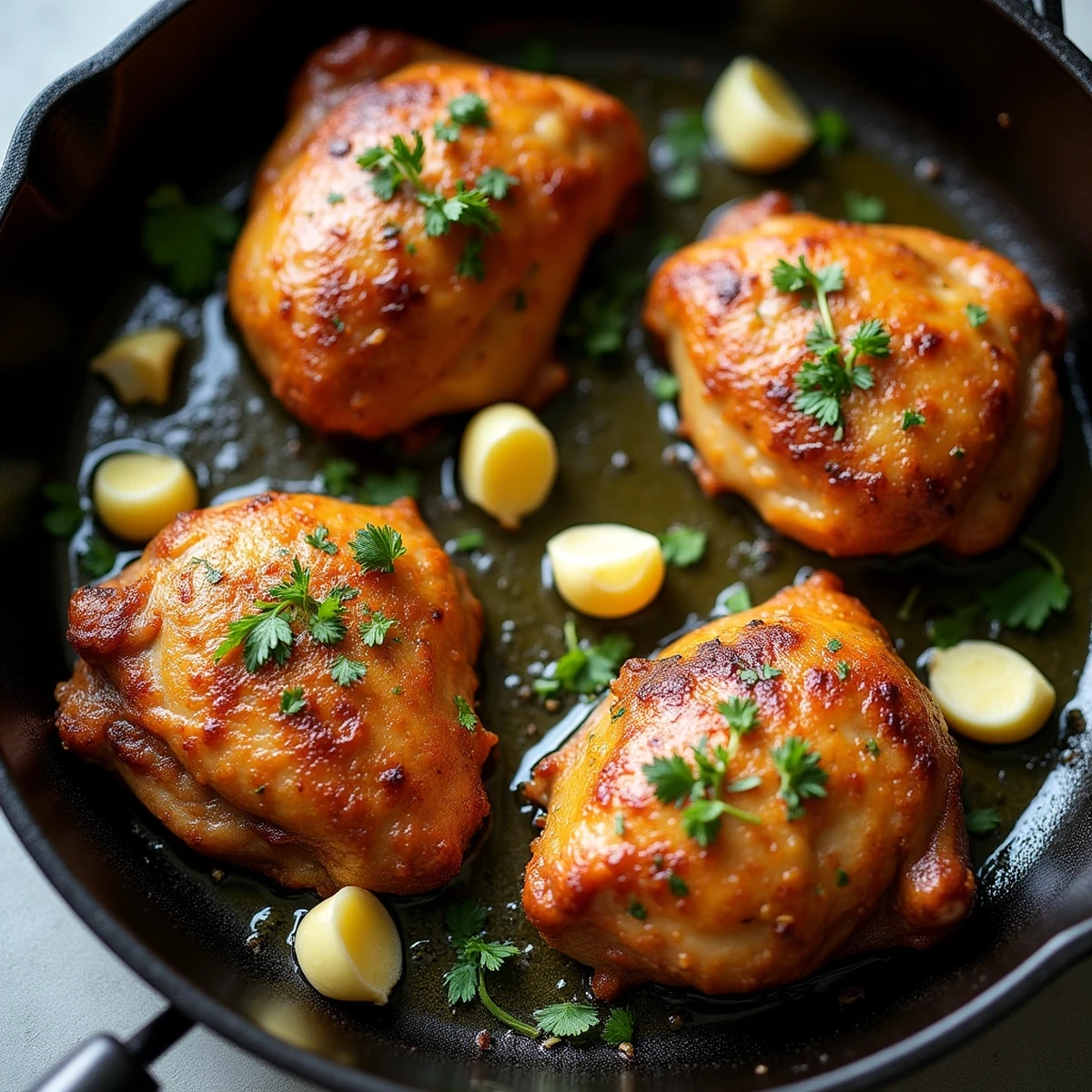
I want to be honest with you: this is not the kind of recipe I would normally write about here. Whisk Whispers lives in the world of flour and butter and slow fermentation, of doughs that need a night to rest and custards that need a steady hand. But there is a version of cooking that belongs to the same spirit as baking — the version that asks you to pay attention, to listen for the sound of something doing exactly what it should, to resist the urge to fuss. These chicken thighs are that version.
I have been making some form of this dish on weeknights for the better part of twenty years. It started as Thierry’s request — he has always been a patient taster, willing to eat whatever I’m testing, but on Tuesday evenings when we are both tired and the week feels long, he would quietly say, “Something simple tonight?” Over time, simple became a practice. Pat the thighs dry. Lay them cold-skin-down in a warm pan. Do not move them. Wait for the sound to change — from a sharp, assertive sizzle to a quieter, steadier one — and then you know the skin is beginning to release. That is the turn.
The garlic butter comes at the end, which is where it belongs. Butter added too early will burn before the skin has had time to do its work. Added at the right moment — when the skin is golden and lacquered and the pan needs something to come back to life — it pools around the thighs and foams and becomes something that smells like the best version of a weeknight dinner. I spoon it over the top, again and again, while the kitchen fills with the kind of warmth that asks nothing of anyone.
This is the recipe for a Tuesday in February, or a Thursday in October, or any evening when the day has been long and the kitchen is the only room in the house where something good is happening.
Ingredients
- 4 bone-in, skin-on chicken thighs (approximately 900 grams total)
- 1 teaspoon fine sea salt
- 1/2 teaspoon freshly ground black pepper
- 1/2 teaspoon smoked paprika
- 3 tablespoons unsalted butter, divided
- 1 tablespoon neutral oil (such as grapeseed or sunflower)
- 6 cloves garlic, peeled and lightly smashed
- 4 sprigs fresh thyme
- 1 sprig fresh rosemary
- 1 tablespoon fresh flat-leaf parsley, finely chopped, for finishing
Instructions
-
- Remove the chicken thighs from the refrigerator 20 minutes before cooking. This is not optional — cold chicken placed in a hot pan will seize, the skin will tighten unevenly, and the cook will be uneven throughout. Set them on a small tray and let them come toward room temperature while you prepare everything else.
-
- Pat the chicken thighs thoroughly dry with paper towels — the skin surface, the underside, and between any folds. Dry skin is the only path to a genuinely crisp result. Season both sides with salt, pepper, and smoked paprika, pressing the seasoning gently so it adheres.
-
- Place a heavy oven-safe skillet — cast iron is ideal — over medium heat. Add 1 tablespoon of butter and the neutral oil. Allow the pan to come to temperature until the butter is melted and just beginning to foam, but not yet browning. The oil raises the smoke point and gives the butter time to do its work.
-
- Place the chicken thighs skin-side down in the pan without crowding them. Do not move them. This is the step that asks the most of you, because the instinct is always to check, to lift, to peek. Resist it. Press each thigh gently with the back of a spatula for the first 30 seconds to ensure full contact between skin and pan, then leave them entirely alone.
-
- Cook over medium heat for 18 to 22 minutes, skin-side down, until the skin is deeply golden and releases from the pan without resistance. You will hear the sizzle change as the fat renders — it becomes quieter, more settled. That sound is your cue that the process is working. When the skin lifts cleanly and is a uniform amber-gold, the thighs are ready to turn.
-
- Flip the thighs and reduce the heat slightly to medium-low. Add the remaining 2 tablespoons of butter, the smashed garlic cloves, the thyme sprigs, and the rosemary to the pan. The butter will melt and foam around the chicken, and the garlic will begin to soften and color.
-
- Tilt the pan slightly and, using a large spoon, baste the chicken with the pooling garlic butter continuously for 2 to 3 minutes — spooning it over the top of each thigh in a steady, patient rhythm. The internal temperature should reach 74 degrees Celsius (165 degrees Fahrenheit) at the thickest part, away from the bone. This matters.
-
- Remove the pan from the heat and allow the chicken to rest in the pan for 5 minutes. Do not cover it — the skin needs air. Resting allows the juices to redistribute and the garlic butter to settle back around the thighs. The kitchen will smell very good during these five minutes. Let it.
-
- Transfer the thighs to a warm plate or serving board. Spoon any remaining garlic butter from the pan over each one. Scatter the chopped parsley over everything. Serve immediately, while the skin is still audibly crisp when you press it gently with a fork.
Nutrition
Tips
A few things I have learned, sometimes on a tired Wednesday when the pan was too crowded or the heat was too high:
1. Dry the skin as though you mean it. I press the paper towel firmly against each thigh and hold it there for a moment, rather than simply dabbing. Any remaining moisture on the surface will steam rather than sear, and steam is the enemy of the crust you are after. If you have time, you can lay the seasoned thighs uncovered on a rack in the refrigerator for an hour before cooking — the cold air will draw out additional surface moisture and improve the result considerably.
2. Do not rush the skin-side. The temptation to increase the heat and accelerate the process is understandable, particularly on a weeknight when there are other things to attend to. But high heat will brown the skin before the fat beneath it has had time to fully render, and you will end up with a dark crust over a layer of flabby, under-cooked fat. Medium heat, patience, and the sound of the sizzle settling — that is the whole technique.
3. Smash the garlic, do not mince it. Whole smashed cloves release their flavor slowly into the butter, infusing it without burning. Minced garlic in a hot pan with butter will turn bitter before it turns golden. The smashed cloves can be left in the pan and served alongside the chicken — by the time the dish is done, they will be soft and sweet and completely transformed.